Arancini
Sicily's Golden Rice Balls
Origins
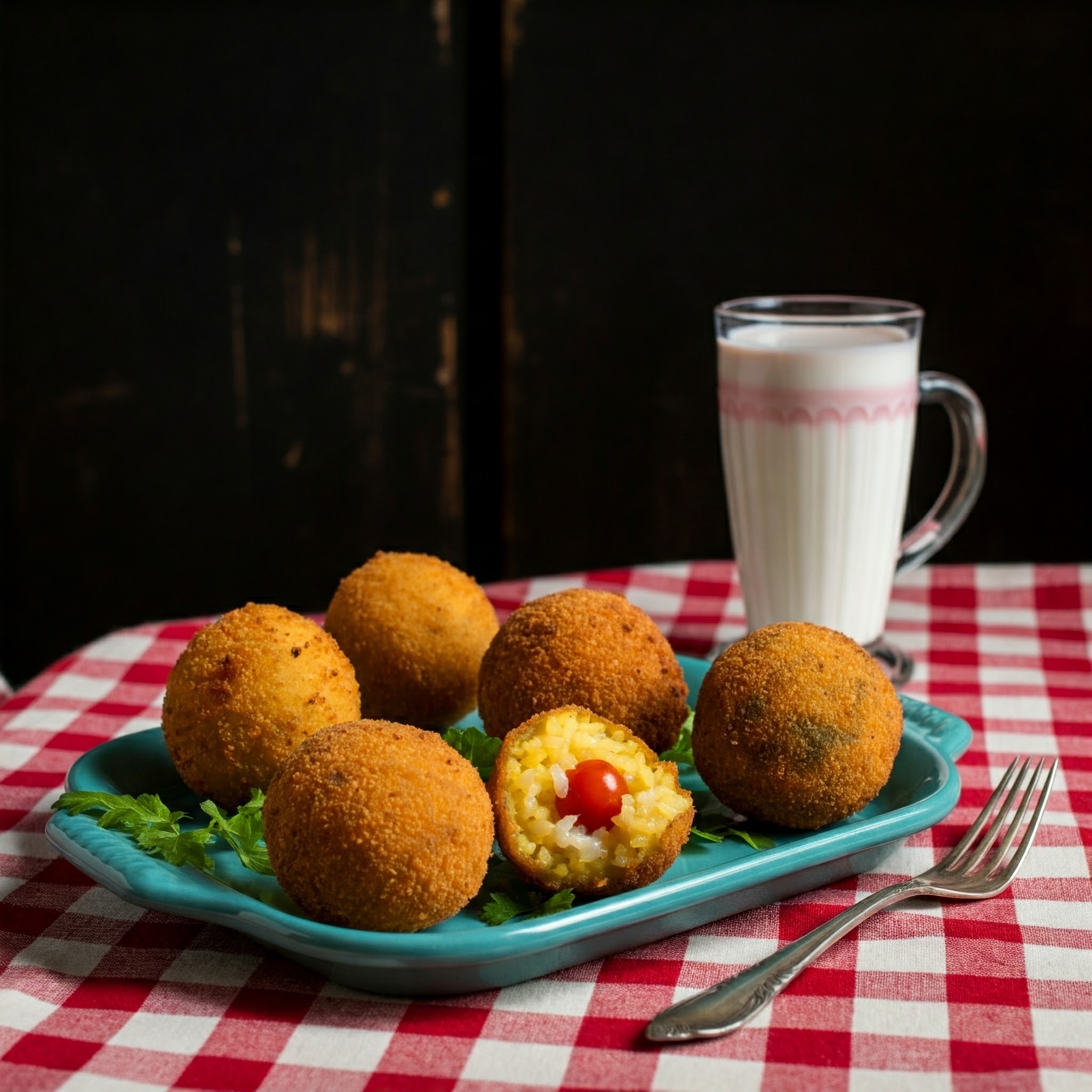
Arancini emerged in Sicily under Arab influence, utilizing rice and local ingredients. Initially created as a portable meal for hunters and travelers, these golden spheres evolved into street-food icons. Their name, meaning "little oranges," reflects their round shape and golden color achieved through careful frying.
Cultural Significance
These golden "little oranges" embody Sicily's blending of cultures and resourcefulness. They represent a culinary link between East and West, showcasing how Sicily's diverse historical influences created unique and enduring culinary traditions that continue to captivate food lovers worldwide.
Traditional Preparation
Creating perfect arancini requires skill and patience. Rice is cooked with saffron, then shaped around a filling of ragù, peas, and cheese. The balls are breaded and fried until golden brown and crispy. Regional variations might include different shapes and fillings, each telling its own story of local preferences and traditions.
Modern Evolution
With street food gaining global popularity, arancini's adaptability ensures continued evolution. Modern chefs experiment with novel grains, vegetarian fillings, and fusion flavors while respecting traditional techniques. From street vendors to gourmet restaurants, arancini showcase how humble ingredients can be transformed into beloved culinary treasures.